Interpreting services in all world languages
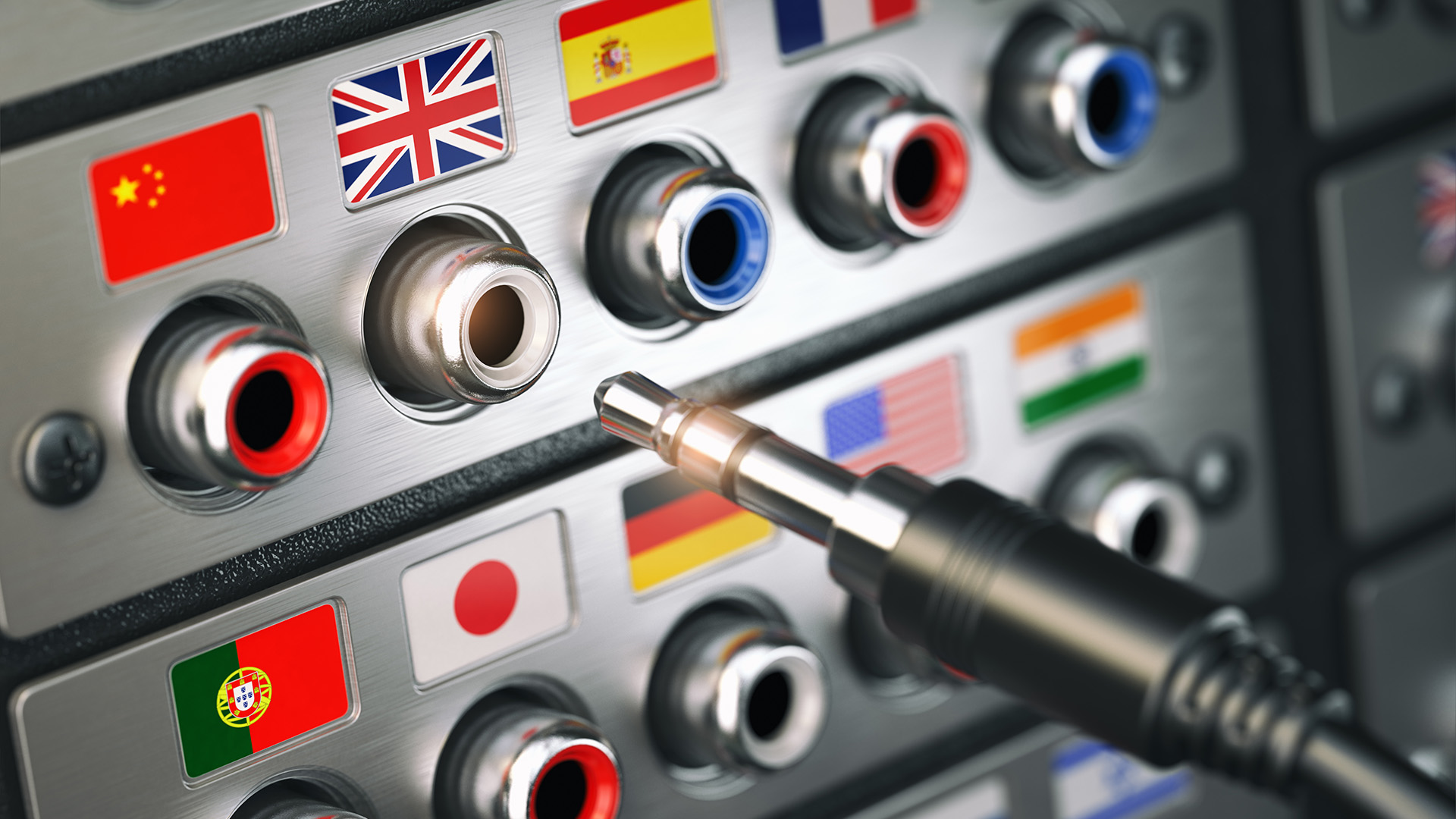
For 50 years, KERN has been providing interpreting services in all the world’s languages and interpreting equipment for companies from different sectors, such as courts, authorities and lawyers. Drawing from a network of qualified interpreters, we will provide you with the right interpreter for your conference, convention, business meeting, press conference, court hearing or trade fair presentation.
The interpreters are professionally trained specialists with a university degree or have passed a state examination and have specialist knowledge and many years of experience in various fields of expertise. This is how we guarantee top-quality.
The most requested types of interpreting are liaison and escort interpreting, as well as conference interpreting. In addition there are further possibilities for mediating between two interlocutors who speak different languages, e.g. telephone interpreting and whispered interpreting/chuchotage or video interpreting.
Consecutive interpreting
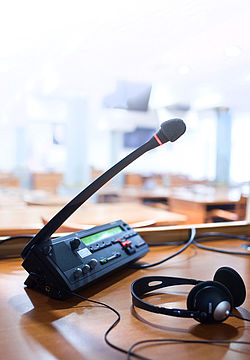
During consecutive interpretation, the interpretation is consecutive, i.e. time-delayed. During the source language speech, the interpreter notes down the speaker's ideas and explanations using a special note-taking technique. As soon as the speaker has finished the utterance, or pauses, the interpreter will render what has been said in the target language. As the speech is given twice with this technique, please note that a meeting or conference can last substantially longer when using a consecutive interpreter.
Simultaneous interpreting
With simultaneous interpretation, the interpreter sits in a soundproof booth and listens to the speaker via a headset. The interpreter translates the speech simultaneously and continuously into the target language using simultaneous interpreting equipment. This technique demands a high degree of focus from the interpreter. Due to the high level of exertion, simultaneous interpreters work in teams of at least two and alternate with each other after 15 to 20 minutes. Simultaneous interpreters thoroughly prepare themselves for the topic of speech in advance in order to ensure high-quality interpretation.
Live speech-to-text interpretation
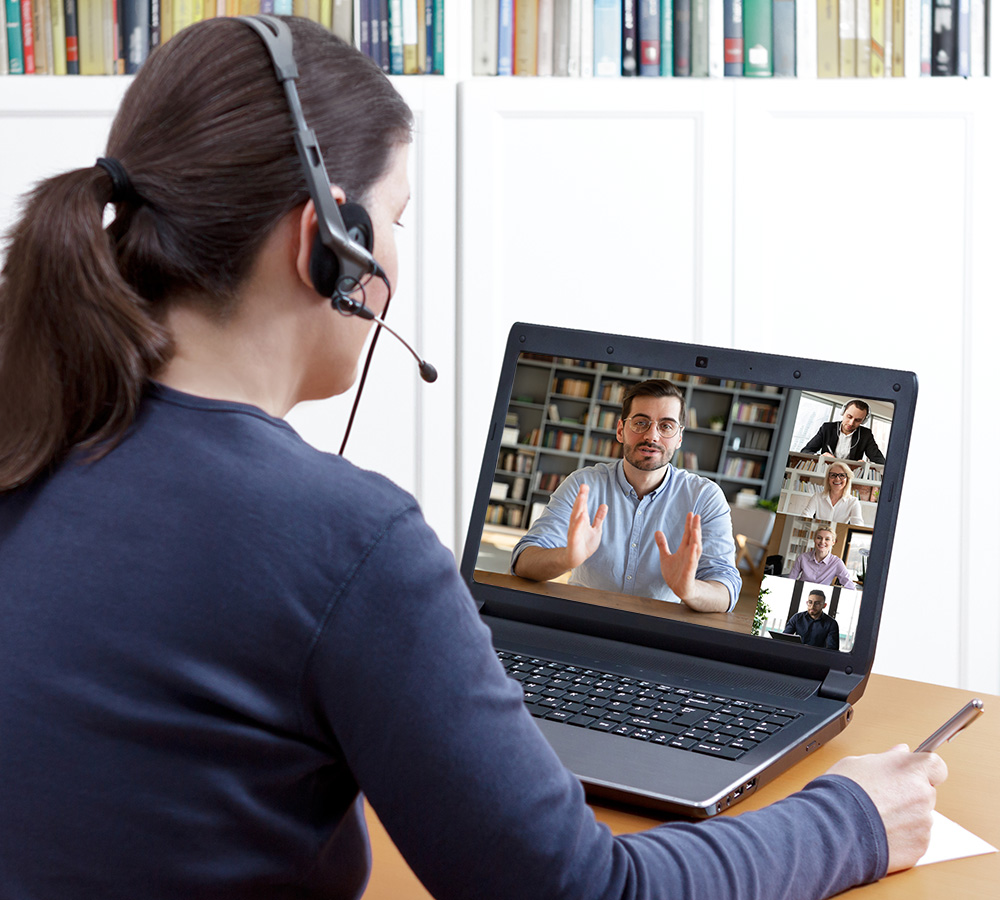
If requested, we will provide you with a speech-to-text interpreter who will be at your disposal during online live broadcasts. In this way, online events, for example on YouTube, can be subtitled live and simultaneously in a foreign language.
Advantages of online interpreting
- Digital implementation of multilingual conferences/events
- No tiresome organisation of on-site conferences
- Interpreters able to be deployed remotely
- International reach
We offer you two options for online interpreting:
Interpreting equipment and conference technology
KERN hires and installs all required equipment for a conference or interpretation:
- Wireless, infrared simultaneous interpretation facilities
- Tour guide systems
- interpreter/speaker booths
- Sound equipment (amplifiers, speakers, tape recorders etc).
- Video systems (recorders, cameras and screens etc)
- Production facilities (overhead projectors, projection screens etc)
- Further audiovisual systems
wireless simultaneous interpretation facilities
These types of mobile simultaneous interpretation facilities are particularly suitable for international events or conferences (for 50 to 5,000 participants), planning and management seminars, strategic discussions and specialist seminars, educational forums and panel discussions, etc. Tape recorders are recommended for unscripted conference presentations. Technicians control the sound recording and duplicate the speeches, presentations and discussions.
Tour guide systems
Tour guide systems are recommended in cases where a group of listeners is able to move freely. Tour guide systems are ideally used for factory visits, exhibitions and fairs, city tours, and testing grounds. The rental and installation prices depend on the configuration and design of the system, the distance to the venue and the term of lease.
Interpreting and Voice-Over Booths
KERN Global Language Services supports event managers by renting modern conference technology as well as interpreter/speaker booths. The interpreter booths conform to both DIN and ISO requirements and they provide the best working environments for the interpreters. In terms of their structure, they can be adapted to fit the requirements on location, thus guaranteeing the maximum level of functionality in all environments.
Inquiry & consultation
Would you like to find out more about our interpreting services? Call us at 212-953-2070 or send us an email at kern.ny@e-kern.com.
... or contact us directly
We are happy to help

We are there for you Monday to Friday from 8:00 AM to 7:00 PM.
Phone: 212-953-2070
Email: kern.ny@e-kern.com
Language Courses