
By using professional illustrations, 3D visualisations and digital media, you can make your documentation easier to understand and reduce errors in its use.
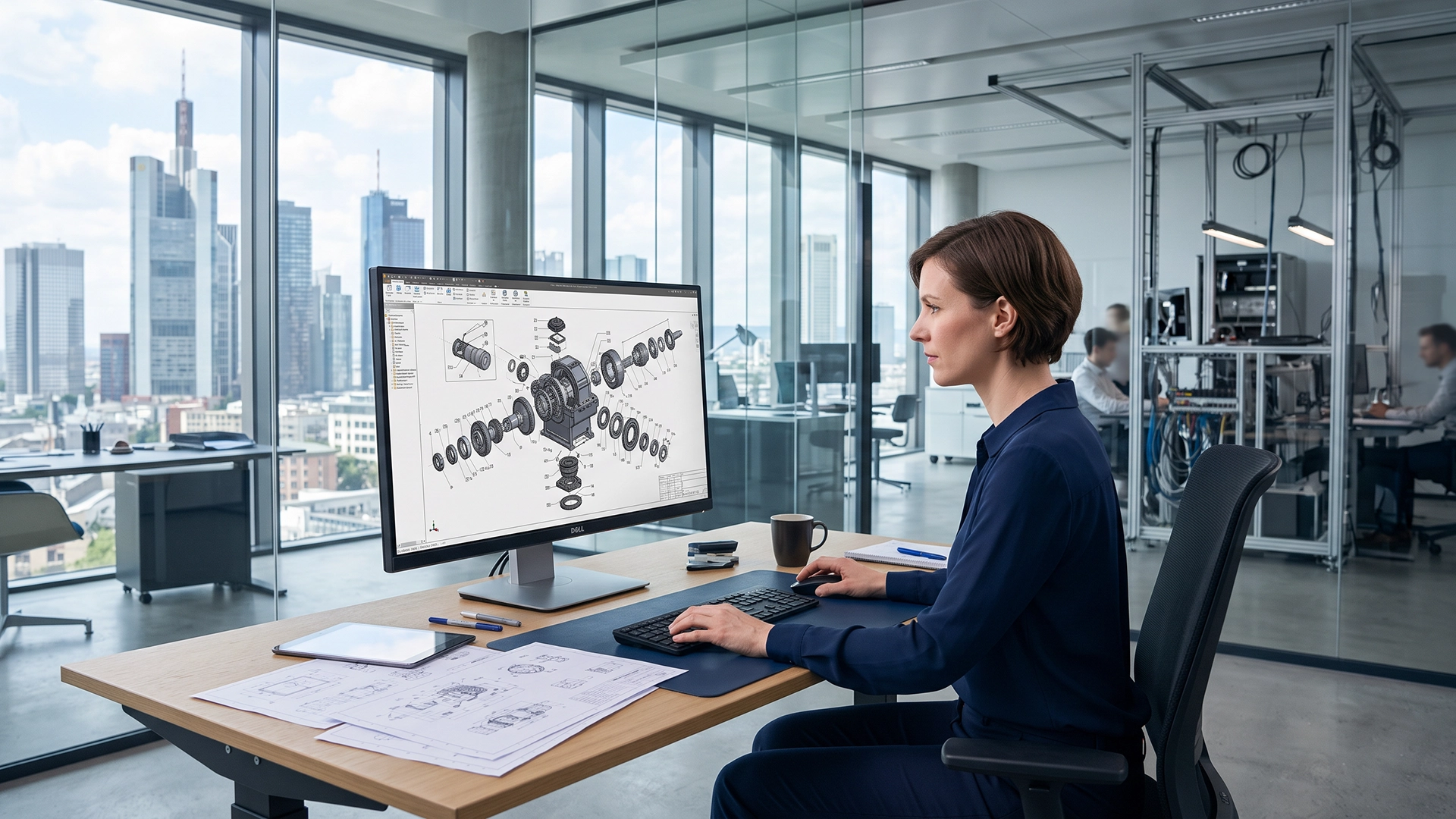
By using professional illustrations, 3D visualisations and digital media, you can make your documentation easier to understand and reduce errors in its use.
Home » Technical documentation » Technical illustration
Technical visualisation for greater clarity
Technical documentation must convey information quickly and clearly. Well-designed illustrations help users to operate products correctly, carry out assembly work safely and better understand technical processes.
We develop bespoke visualisation solutions for operating instructions, service manuals, training documents and digital information systems. The result is clear and accessible content that enhances both the user experience and the quality of your documentation.
Our services in the field of illustration and media
Detailed illustrations of assemblies and components for spare parts catalogues, maintenance documentation and assembly instructions.
Step-by-step illustrations for safe and straightforward product assembly.
Clear insights into technical processes, internal structures and how complex products work.
Realistic renderings of machinery, plant and products for documentation, marketing and training.
Graphical presentation of technical information to facilitate quick comprehension.
Visualisations for online help systems, knowledge bases, portals and digital documentation solutions.
Concise quick guides focusing on the most important operating and process steps.
Why technical illustrations are so important
Visualisations complement technical texts where language alone is not sufficient. They help users to grasp information more quickly and avoid misunderstandings.
Your benefits
- Greater user-friendliness
- Fewer operating errors
- Faster information retention
- International comprehensibility
- Reduced translation effort
- A more professional overall impression of the documentation
- Reduced need for support


What are technical illustrations suitable for?
Our illustrations are used in the following, amongst others:
- Operating instructions
- User guides
- Maintenance documentation
- Assembly instructions
- Service manuals
- Spare parts catalogues
- Training materials
- E-learning solutions
- Product information
- Online help and knowledge portals
From the initial idea to the finished visualisation
We assess the product, the target audience and the documentation requirements.
Determining the appropriate presentation format and visualisation concept.
Development of illustrations based on your data, drawings or CAD models.
Checking for technical accuracy, clarity and consistency.
Delivery of graphics for print, digital media or content management systems.
Frequently Asked Questions about Technical Illustrations and Media
What are technical illustrations?
Technical illustrations are graphical representations of products, components or processes. They help to convey complex technical information in a way that is easy to understand and visually clear.
Why are technical illustrations important?
They make complex content easier to understand, reduce misinterpretations and significantly improve the user-friendliness of documentation.
What types of technical illustrations are there?
The most common types include:
- Exploded views
- 3D visualisations
- Sectional views
- Assembly illustrations
- Functional diagrams
- Infographics
- Pictograms
- Spare parts diagrams
What are the benefits of 3D visualisations?
3D visualisations enable realistic presentations of complex products and make it easier to understand functions, components and assembly processes.
Can technical illustrations reduce translation costs?
Yes. Visualised information often reduces the amount of text required and makes it easier to use documentation internationally, which can help to reduce the cost of translation.
Do I need CAD data for the design?
Not necessarily. Illustrations can often be created using photographs, drawings, existing documentation or CAD models.
Can existing illustrations be updated?
Yes. Existing graphics can be revised in terms of design, clarity, up-to-date status and media usage.
Are technical illustrations also suitable for digital applications?
Yes. Illustrations are now frequently used in online help sections, knowledge bases, e-learning systems, apps and interactive documentation.